
Why Baccarat Patterns Fool Every Player

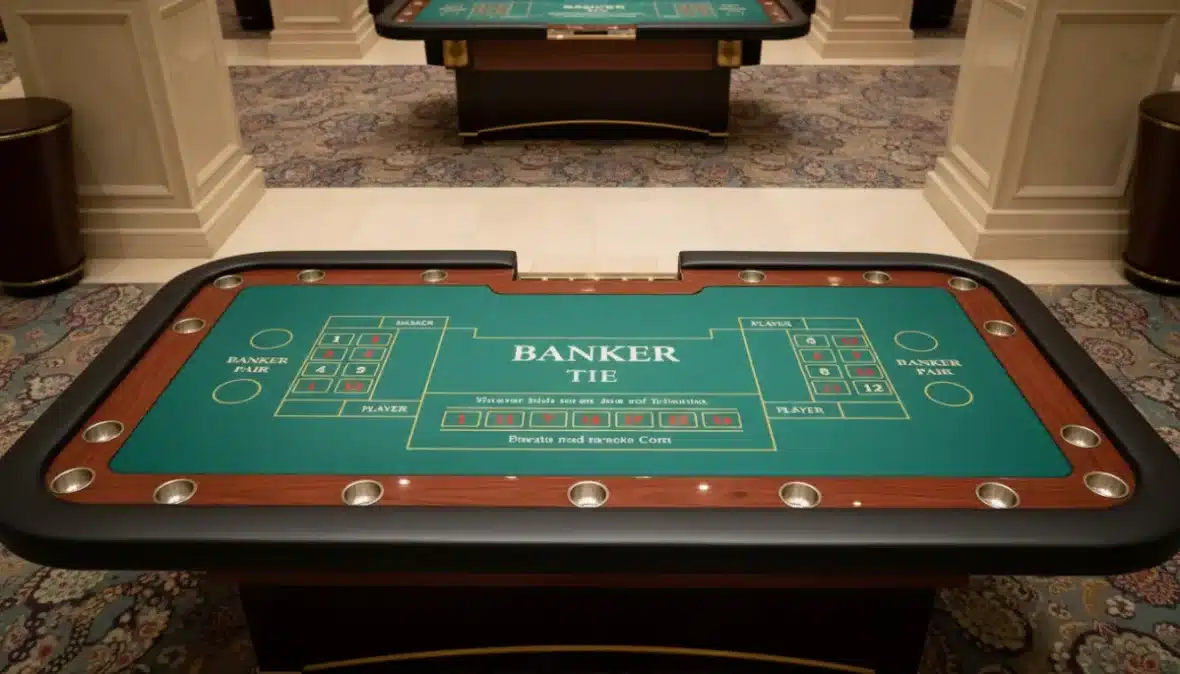
Baccarat captivates players with its allure of spotting trends in the cards, yet mathematics reveals these patterns hold no power over future outcomes. This comprehensive exploration dismantles the illusion, explaining the independence of each hand, human psychology at play, and genuine strategies for smarter play.
Understanding Baccarat’s Tracking Tools and Their Appeal
In casinos across Canada and online platforms, baccarat stands out for its elaborate result-tracking systems, which draw players into a false sense of control. Establishments supply complimentary scorecards, while digital screens overhead render past hands in varied visual formats to emphasise sequences. These tools transform simple Banker, Player, and Tie results into intricate grids that seem to whisper predictions.
The primary displays include:
- Bead plate: A straightforward grid logging outcomes in chronological order, column by column.
- Big road: Columns of red (Banker) and blue (Player) circles that build vertically for streaks and drop to new columns for breaks, creating a ladder-like pattern.
- Big eye boy: A derivative chart scanning the big road for consistency or choppiness in streak patterns.
- Small road: Similar to big eye boy but starting from a different point, highlighting repetition types.
- Cockroach pig: The most complex derived road, focusing on further pattern repetitions for the boldest trackers.
These systems reformat history to spotlight regularities, making random results appear structured. To novices, they resemble advanced analytics; to probabilists, they chronicle the past without forecasting the future. Casinos encourage this by providing them gratis, knowing engaged players wager more and linger longer.
The Independence Principle: No Memory in the Shoe
At baccarat’s heart lies a fundamental truth: each hand operates independently in a standard six- or eight-deck shoe. Previous draws deplete specific cards, causing minor shifts in the deck’s makeup, but these alterations prove negligible for prediction. Probabilities remain steadfast—approximately 45.86% for Banker, 44.62% for Player, and 9.52% for Tie—unchanged by prior streaks.
Consider a streak of ten Banker wins: it does not tilt odds toward Player next. The shoe lacks memory, refusing to “balance” itself. This defies the gambler’s fallacy, where players anticipate reversals after runs, mistaking randomness for intent.
To illustrate key probabilities and house edges, review this table:
| Bet Type | Win Probability | House Edge (approx.) |
|---|---|---|
| Banker | 45.86% | 1.06% (after 5% commission) |
| Player | 44.62% | 1.24% |
| Tie | 9.52% | 14.36% |
This table underscores why pattern-chasing distracts from fixed edges. Even prolonged streaks align with expected variance in independent trials; no sequence predicts the subsequent hand reliably.
Psychology Behind the Pattern Obsession
Human brains crave order, a trait honed by evolution for survival—detecting tiger stripes in foliage or migration cycles for sustenance. False positives cost little; missed real patterns could prove fatal. Thus, we overlay structure on chaos effortlessly.
Behavioural studies confirm people underestimate streaks in true randomness. A string of five Bankers feels portentous, not routine. In baccarat, vivid displays amplify this, transforming noise into signal. Casinos exploit it profitably: pattern-focused players bet fervently, convinced of insight, boosting house take.
Yet awareness liberates. Recognising cognitive bias as the driver shifts focus from futile prophecy to probabilistic reality.
Flawed Systems Relying on Patterns
Many betting progressions hinge on pattern myths, promising edges where none exist. Here are common culprits, dissected:
- Martingale: Double bets post-loss, presuming overdue wins. A loss streak drains bankrolls swiftly, ignoring constant odds.
- Paroli: Let profits ride during streaks, banking on continuation. Variance yields occasional gains, but house edge prevails long-term.
- Trend following: Wager with streaks (e.g., more Banker after Bankers). Treats clustering as momentum, blind to independence.
- Trend reversal: Bet against streaks, expecting chop. Equally fallacious, as no “correction” looms.
No system alters core maths. Progressives amplify variance, yielding short triumphs but inevitable erosion via negative expectation. With finite funds against endless hands, ruin beckons mathematically.
True Strategy: Bets, Edges, and Discipline
Dispelling pattern myths unveils baccarat’s slim strategic scope. Prioritise Banker for its 1.06% house edge post-commission, shunning Tie’s 14.36% trap despite payouts. Player’s 1.24% suffices when avoiding commission.
Bankroll discipline reigns supreme:
- Establish session limits upfront.
- Set win/loss stops rigidly.
- Resist chasing losses via escalation.
- View play as leisure with defined cost, not revenue stream.
These habits separate measured enjoyment from regretful excess. Side bets often worsen edges further, best avoided unless for fun.
Embracing Baccarat’s Pure Elegance
Baccarat endures as a refined casino pursuit—measured pace, binary choices, sophisticated vibe at premier tables. Ditching pattern hunts enhances pleasure, freeing players to savour the ritual sans decoding pressure.
Cards ignore history; shoes demand no equity. Charts log, not prophesy. This clarity fosters honest engagement, grounded in odds and restraint, elevating the experience beyond illusory control.
