
Bitcoin Pauses at $64K Amid Oil Surge and AI Sector Uncertainty

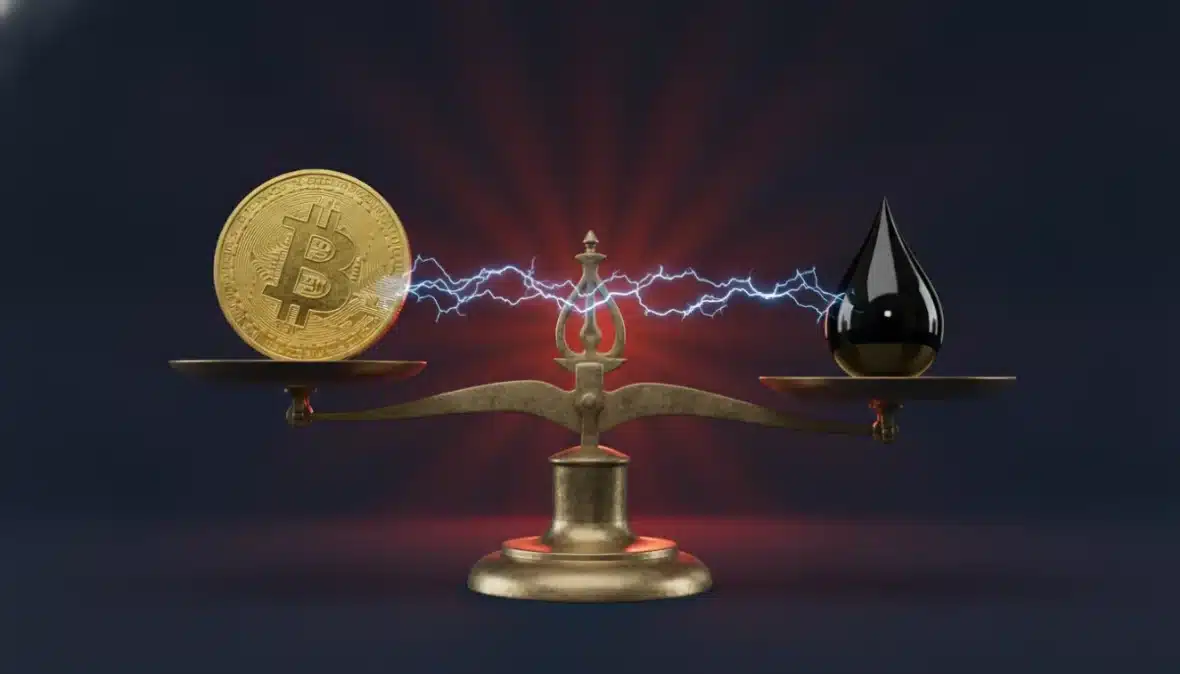
Bitcoin has entered a period of consolidation this week, hovering near $64,200 as traders navigate a complex macroeconomic environment defined by two conflicting forces. The world’s largest cryptocurrency is essentially flat over the past 24 hours, yet it retains a modest 3% weekly gain, supported by roughly $18 billion in daily trading volume . This standstill reflects a market caught in a tug-of-war: escalating geopolitical tensions are driving oil prices to one-month highs, reigniting inflation fears that typically pressure risk assets, while a breakthrough in Chinese artificial intelligence is shaking confidence in U.S. tech stocks and the semiconductor sector that Bitcoin has recently tracked .
Geopolitical Oil Spikes and AI-Driven Tech Volatility
The primary driver of current market hesitation is the sharp rise in energy costs linked to widening military strikes between the United States and Iran. Brent crude surged approximately 4%, reaching $91.42 per barrel, its highest level since June . This escalation has pushed the conflict beyond strictly military targets, entering its second week and threatening roughly 20% of global crude oil supply through disruptions in the Strait of Hormuz . For cryptocurrency investors, this oil spike is critical because it revives a stagflation narrative that had only recently cooled following softer U.S. price data earlier in the month . Higher energy costs complicate the Federal Reserve’s path, making it less likely to hold interest rates steady or cut them soon, which generally dampens appetite for volatile assets like Bitcoin .
Simultaneously, the artificial intelligence sector faces a reality check triggered by Moonshot AI’s Kimi K3, a Chinese open-weight model that recently topped a major coding benchmark . This announcement sparked a sharp selloff in semiconductor stocks, which spilled over into the crypto market and left a sour note on the week’s close . The aftershock was particularly evident in Asian trading, where South Korea’s Kospi index fell 3.5% as local traders reacted to the news for the first time after a holiday . While U.S. equity futures showed tentative stabilization with the Nasdaq 100 rising 0.5%, the underlying question regarding U.S. AI dominance remains unresolved, creating lingering uncertainty for investors .
Altcoin Performance and Key Earnings Catalysts
Beyond Bitcoin, the broader cryptocurrency market displayed muted price action with one notable exception. The performance of major tokens varied significantly as traders adopted a cautious, risk-off approach:
- Ether (ETH) emerged as the standout performer, trading at $1,860 and posting a 5% gain over the past seven sessions, marking the best performance among major cryptocurrencies for two consecutive weeks .
- XRP held steady near $1.09, while Solana traded at $76, BNB eased slightly to $565, and Dogecoin remained close to $0.07 .
- Hyperliquid’s HYPE was the clear laggard, dropping 10% for the week to $60. This decline appears to reflect the market’s broader risk-off mood rather than any specific news event .
With no major U.S. economic data scheduled for release this week, the cryptocurrency market’s next significant catalyst will likely come from corporate earnings reports rather than government statistics. Key tech companies are set to report, including Alphabet on Tuesday, Tesla on Wednesday, and Intel on Thursday . These results carry heightened importance given last week’s turbulence in AI and chip stocks, as they will help determine whether the capital spending plans fueling the AI boom—and the related crypto mining-to-AI pivot many companies have bet on—still possess solid financial footing .
Bitcoin’s current flat price action is not a sign of market calm, but rather an indication of a sector trapped between two powerful, opposing narratives. Until the war-driven oil rally subsides or the AI sector regains its confidence, crypto traders may continue to experience directionless price movements, with this week’s earnings season ready to serve as the next major catalyst for market direction .
